
À propos de ce cours
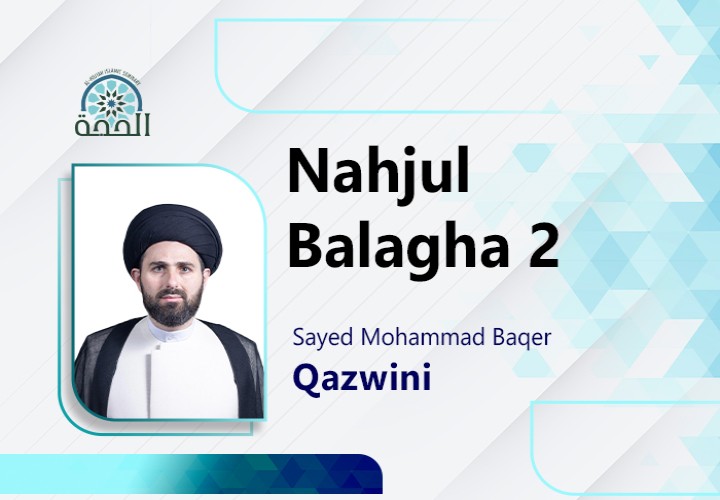
The "Nahjul Balagha (Part 2)" video course, taught by Sayed Mohammad Baqir Qazwini, continues the exploration of essential spiritual, ethical, and governance themes in Nahj al-Balaghah. The course covers the role of Ahlulbayt (a), Satan's tactics, spiritual firmness, justice, power, contradictory fatwas, the dimensions of the Qur'an, types of corruption, and the necessity of governance. It helps you understand Imam Ali’s teachings on moral resilience, accountability, leadership, and personal truth. The content is presented in a clear, well-documented, and analytical manner, providing deep insight into the wisdom of this valuable book.
Each session includes video lecture, a summary PDF, and exercises.
Course Objectives
This course is designed to examine the profound ethical, socio-political, and theological principles articulated in Nahj al-Balaghah. The primary goal is to provide well-documented, evidence-based answers from the sermons and sayings of Imam Ali (peace be upon him) to contemporary spiritual and societal challenges.
The course delves into critical subjects, such as navigating doubts, recognizing the psychology of temptation, understanding the impact of human sins on nature, identifying corrupt individuals, and examining symbolic historical moments—such as Imam Ali (a) repairing his sandal—to illustrate the true purpose of authority and humility.
Through reading summaries and completing exercises, students will develop a deeper analytical understanding of these fundamental issues. The course not only enhances knowledge but also encourages critical thinking on leadership, justice, personal discipline, and divine guidance in Islam.
Key Questions Answered in This Course
This course provides authentic and well-documented answers from Nahj al-Balāghah to fundamental ethical, theological, and governance questions, including:
- Why are the Ahlulbayt (a) established as the primary source of guidance?
- What psychological tactics does Satan use, and how can believers remain firm?
- How does justice bring social relief, and what is the relationship between power and religion?
- How did Imam Ali (a) explain the crisis of contradictory fatwas and legal discrepancies?
- What are the multi-layered spiritual dimensions of the Qur'an?
- What profound lesson on authority and humility is found in the event of Imam Ali (a) repairing his sandal?
- Why did Imam Ali (a) emphasize the absolute necessity of having a ruler and governance system?
- How can individuals address doubts, identify corrupt elements, and maintain loyalty amidst ultimate betrayals?
Who Should Take This Course?
This course is ideal for students, researchers, and those interested in Islamic ethics, leadership, and spiritual self-development. It also benefits scholars, lecturers, and religious speakers who wish to deepen their understanding of Imam Ali's practical philosophy and governance principles.