
Über diesen Kurs
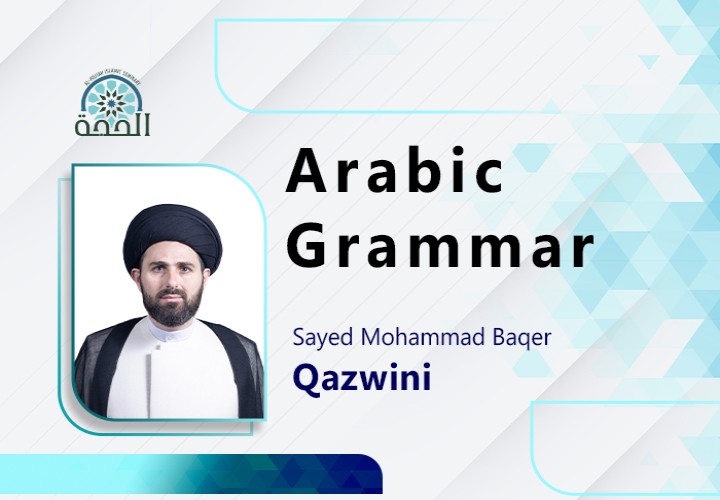
Provided by al-Hujjah Seminary, Arabic Grammar, taught by Sayed Mohammad Baqer Qazwini, provides a structured study of Arabic grammar and syntax. The course introduces the main grammatical rules and structures used in Arabic, from basic verb forms and sentence construction to more advanced topics involving particles, pronouns, objects, and grammatical relationships.
Verbs and Sentence Structure
The course begins with an introduction to the features and history of Arabic before examining past-tense, present-tense, and imperative verbs. It then covers subjects and direct objects, verbal and nominal sentences, and the grammatical functions of different parts of a sentence.
Grammatical Particles and Verb Constructions
Several sessions focus on important Arabic grammatical particles and their effects on verbs and sentences, including Nasb and Jazm particles, کان (Kana) and its sisters, إنّ (Inna) and its sisters, and various forms of the causal and negating particles. The course also examines structures involving حتّی (Hatta), فاء السببية (the causal Fa), لمّا (Lamma), and other particles.
Nouns, Plurals, and Pronouns
The course covers a range of important noun structures, including adjectives, the dual (Muthanna), sound masculine and feminine plurals, broken plurals, demonstratives, and the Five Nouns. It also examines attached and hidden pronouns and their use with past and present verbs.
Idhafah and Other Grammatical Structures
Learners study Idhafah (the possessed and possessor construction), relative pronouns, passive verbs and their subjects, continuous verbs, and several types of objects and complements. These include the absolute object (al-Mafʿūl al-Muṭlaq), causal object, temporal adverbs (al-Mafʿūl Fih), vocatives (Munada), and Tamyeez.
Advanced Grammar and Sentence Formation
The later lessons introduce conjunctions, exceptions, and question formation, while also examining the grammatical rules governing numbers and other sentence structures. Together, these topics provide learners with a broader understanding of how Arabic sentences are formed and analyzed.
Learning Materials
Each session includes a PDF containing the important points of the lesson and a multiple-choice quiz to help learners review the material and assess their understanding.