On the sidelines of the official visit by Imam Sadiq Academy leadership to Holy Najaf, a consultative session was convened with Allamah Zafar Abbas Shahani. Discussions centered on evaluating the platform's instructional capacity, analyzing the strategic imperative of online education for the future trajectory of seminaries, and identifying shared frameworks for collaborative initiatives.
In this session, the Imam Sadiq Academy platform and its capabilities in expanding Islamic sciences education and facilitating access for seminary students and seekers of religious knowledge were presented. Furthermore, discussions addressed the role of modern technologies in broadening seminary instruction and meeting the educational needs of students across various regions of the world.
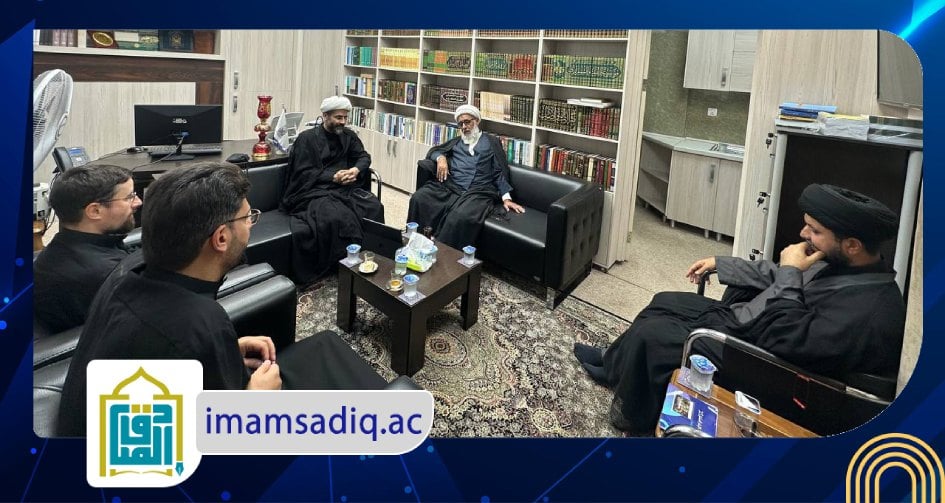
Allamah Shahani also presented a comprehensive report on his educational activities, highlighting his eleven-year experience in recording and disseminating seminary courses in Urdu. Noting that these initiatives were launched independently without organizational backing, he explained that he has recorded numerous courses ranging from introductory levels up to Kifayat al-Usul, making them available to Urdu-speaking seminary students free of charge.
Continuing his remarks, he emphasized the vital importance of disseminating knowledge and providing seminary students with access to educational resources, citing the hadith of Commander of the Faithful, Imam Ali (a.s.): ‘The zakat of knowledge is its dissemination’ (Zakat al-Ilm Nashruhu), to underscore the imperative of expanding learning and spreading scholarly heritage.
A major portion of the meeting was devoted to exploring avenues for future collaboration. During this part, discussions focused on prospective joint initiatives between Allamah and his team in promoting and introducing the programs of Imam Sadiq Academy, as well as the imperative of expanding virtual education and facilitating the free, open-access distribution of instructional content.
This meeting was convened within the framework of expanding academic and educational outreach and fostering collaboration with key figures in the domain of religious instruction.
Comments (0)

Categories
Recent posts


دوره های پیشنهادی ...
22 Oct 2025
دینی مدارس کی قابل ...
8 Sep 2025
"دورة علمية بعنوان ...
8 Apr 2025


