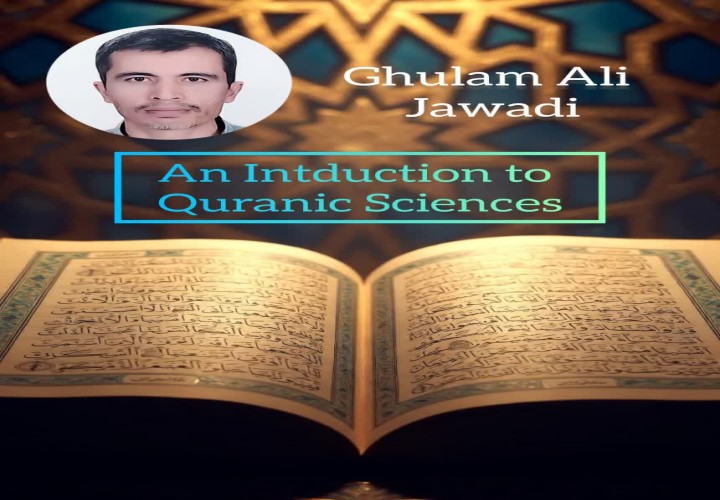
Section One: The Quran
1. Definition and Terminology
a. Literal (Lexical) Meaning of the Quran
b. Terminological (Technical) Meaning of the Quran
2. Names of the Quran
3. Attributes of the Quran
4. Components of the Quran
a. Ayah (Verse)
b. Surah (Chapter)
The First and Last Revealed Ayah and Surah
Section Two: Quranic Sciences
1. Definition of Quranic Sciences
2. Necessity and Benefits of Knowing Quranic Sciences
3. The Position of Quranic Sciences in Tafsir (Exegesis)
4. The Most Important Books in the Field of Quranic Sciences
- The Beginning of Quranic Revelation
- The Wisdom Behind the Gradual Revelation of the Quran
- Creating encouragement and solace for the Prophet (PBUH)
- Timely response to issues and events
- Creating the grounds for understanding and acting upon the Quran
- Meccan and Medinan Verses and Surahs
- Criteria for Identifying Meccan and Medinan Verses
- Characteristics of Meccan and Medinan Verses and Surahs
Definition and Terminology of Wahy
a. Literal Meaning of Wahy
b. Terminological Meaning of Wahy
Applications of Wahy in the Quran
a. Instinctive Guidance
b. Hidden Indication
c. Inspiration
d. Satanic Suggestion
e. Prophetic Revelation (Wahy-e Risali)
The Mode of Revelation to the Prophet (PBUH)
a. Direct Revelation (Ladunni)
b. Indirect Revelation
Differences Between Wahy and Related Concepts
a. Difference between Wahy and Hadith Qudsi
b. Difference between Wahy and Inspiration (Ilham)
c. Difference between Wahy and Mystical Unveiling (Kashf and Shuhud)
- Definition and Terminology
- The Necessity of Miracles
- Difference Between Miracle and the Supernatural Acts of Ascetics or the Charisms of Mystics
- Tahaddi (The Challenge)
- Stages of the Challenge
- Attempts to meet the Challenge
A) Dimensions of the Quran’s Miracle
- Linguistic Miracle: Eloquence and Rhetoric (Fasahat and Balaghat)
- Miracle in Structure and Rhythm
- Numerical Miracle
- Scientific Miracle
- Miracle of the Unseen (Ghaybi)
- Miracle in the Elevated Teachings of the Quran
- Miracle in the Bringer of the Quran (the Prophet)
B) Distinctions of the Quran Over Other Miracles of the Prophets
- Eternal Nature (Everlasting)
- Rational Nature
- Expressive and Living Nature
- Definition of Tahrif
a. Literal Meaning
b. Terminological Meaning
Evidence for the Quran’s Protection from Distortion
a. Quranic Evidence
b. Narrated (Hadith) Evidence
c. Rational Evidence
d. Historical Testimony
e. The Miraculous Nature of the Quran
Examination of the Claims of Those Who Believe in Tahrif
- Proof of the Quran’s Comprehensiveness
- First Category: Verses of Comprehensiveness
- Second Category: Universality of the Quran
- Third Category: Eternal Nature of the Quran
- Different Views on the Comprehensiveness of the Quran and Its Meaning
Definition and Terminology
a. Literal Meaning of “Jam‘” (Collection)
b. Terminological Meaning of the Compilation of the Quran
- Collection meaning preservation in memory
- Collection meaning gathering and compilation
- Writing Materials Used for Revelation
Views on the First Compilation of the Quran
a. Compilation during the Time of the Prophet (PBUH)
b. Compilation by Imam Ali (AS)
- Characteristics of Imam Ali’s Mushaf
c. Compilation by Abu Bakr
Evidence for the Compilation of the Quran during the Prophet’s Lifetime
a. Quranic Evidence
- Verses of Challenge
- The Application of the Word “Kitab” to the Quran
b. Narrated Evidence
- Traditions of compilation during the Prophet’s time
- Hadith al-Thaqalayn
- The Mushaf remaining from the Prophet
- Traditions of the completion of the Quran
- Traditions of the presentation (Ard) of the Quran
c. Rational Evidence
- Divine Wisdom
- The absence of compilation during the Prophet’s time would imply distortion
- The Method of Compilation by Abu Bakr
- The Unification of Mushafs during the Time of Uthman
- The Process of Standardizing the Mushafs
- The Number and Characteristics of the Uthmanic Mushaf
- Diacritical Marks (I’rab and I’jam) in the Quran
- Definition of Qira’at
- Factors Leading to Differences in Recitations
- The Uthmanic Mushaf being devoid of dots and diacritical marks
- Absence of “Alif” in the middle of words
- Differences in dialects
- The Seven Qurra (Readers) and Their Narrators
- Evidence for the Mutawatir (Mass-Transmitted) Nature of the Seven Recitations
- Accepted and Valid Recitations
- Definition and Terminology of Muhkam and Mutashabih
- Causes and Contexts of Ambiguity (Tashabih)
a. Textual causes within the Quran
b. Epistemological causes
c. Historical causes
d. Psychological causes
- Interpretation (Ta’wil) of Mutashabih Verses
- Examples of Mutashabih Verses
- Importance of the Discussion of Abrogation
- Definition of Naskh
- Literal Meaning
- Terminological Meaning
- Naskh in the Quran
- Conditions and Scope of Abrogation
- Examination of Doubts Regarding Abrogation
- Types of Abrogation
- Abrogation of Ruling and Recitation
- Abrogation of Recitation without Ruling
- Abrogation of Ruling without Recitation
- Importance of the Discussion of Asbab al-Nuzul
- Types of Quranic Verses and Surahs in Relation to Asbab al-Nuzul
- Verses and Surahs without Specific Causes of Revelation
- Benefits of Knowing Asbab al-Nuzul
- Understanding the philosophy of rulings
- Removing the illusion of restriction
- Knowing the personalities of early Islam
- Ease in memorizing wording and learning meanings
- More precise understanding of the meanings of verses
- The Authenticity of Hadiths on Asbab al-Nuzul
- Specific Cause and General Ruling
- Definition of the Science of Vocabulary (Mufredat)
- Importance and Benefits of the Science of Vocabulary
- Historical Background of the Science of Vocabulary
- The Role of Vocabulary Science in Tafsir and Translation
- Branches of the Science of Vocabulary
- Gharib al-Quran
- Mu’arrab al-Quran
- Lughat al-Quran
- Majaz al-Quran
- Wujuh wa Nazair
Recommended Resources for Finding the Meaning of Quranic Vocabulary
A) General Resources
- Al-Ayn
- Tahdhib al-Lughah
- Mu‘jam Maqayis al-Lughah
- Lisan al-Arab
- Qamus al-Muhit
B) Specialized Resources
- Ma‘ani al-Quran
- Al-Mufradat fi Gharib al-Quran
- Majma‘ al-Bahrayn wa Matla‘ al-Nayyirayn
- Qamus al-Quran
- Al-Tahqiq fi Kalimat al-Quran al-Karim
- Analysis of Several Quranic Words
- Definition and Terminology of Tafsir
- The Prophet (PBUH) as the First Interpreter of the Quran
- Stages and Diversity of Tafsir
- Exegetical Methods
- Tafsir of Quran by Quran
- Narrative Tafsir (Tafsir Ma’thur)
- Rational Tafsir (Tafsir Ijtihadi)
- Sequential (Tartibi) and Thematic (Mawdu‘i) Tafsir

About this course
**Introduction to Quranic Sciences (Ulum al-Quran)**
This detailed 15-lesson course provides a complete foundation in the scientific study of the Holy Quran. Designed for university students, researchers, Islamic scholars, and anyone passionate about deepening their understanding of the Quran, this lesson plan systematically explores the essential sciences that help believers approach the Divine Book with knowledge, clarity, and reverence.
The course begins with the fundamentals in **Lesson 1**, introducing the literal and technical meanings of the Quran, its various names, attributes, and structural components such as Ayahs and Surahs. It then explains what Quranic Sciences are and why they are indispensable for proper interpretation (Tafsir).
Subsequent lessons dive deep into critical topics:
- The gradual revelation of the Quran and the distinction between Meccan and Medinan verses.
- The nature of **Wahy** (revelation), its types, and how it differs from inspiration or mystical experiences.
- The miraculous nature of the Quran (**I’jaz**), covering its linguistic beauty, scientific insights, numerical patterns, and eternal challenge to humanity.
- The protection of the Quran from any distortion (**Tahrif**), supported by Quranic, historical, and rational evidence.
Students will also study:
- The comprehensive and universal nature of the Quran.
- The historical compilation of the Quran during the Prophet’s time, by Imam Ali (as), Abu Bakr, and the standardization under Uthman.
- The science of **Qira’at** (recitations) and the famous Seven Readers.
- **Muhkam and Mutashabih** (clear and ambiguous) verses.
- **Nasikh and Mansukh** (abrogation) and its conditions.
- **Asbab al-Nuzul** (circumstances of revelation) and its vital role in understanding context.
- The vocabulary of the Quran and essential linguistic resources.
- Various methods of **Tafsir** (exegesis), from Quran-by-Quran to narrative and rational approaches.
This lesson plan is academically rigorous yet accessible. It combines classical Islamic scholarship with clear explanations, making it ideal for both formal classroom teaching and self-study. By the end of the course, learners will gain a profound appreciation of the Quran’s linguistic miracle, historical preservation, spiritual depth, and timeless guidance.
Whether you are a student of Islamic studies, a teacher preparing curriculum, or a seeker of knowledge, this structured program equips you with the essential tools to understand, appreciate, and teach the Holy Quran more effectively.
The course emphasizes not only theoretical knowledge but also practical benefits — enhancing personal faith, improving Quranic recitation and reflection, and strengthening the ability to address contemporary questions through the Quran’s eternal wisdom.
(Please note: The times and days for the class can be changed according to the convenience of the applicant.)