* Introduction
* In the lap of the Prophet (s.a.w.s)
* The first person to embrace Islam
* The great sacrifice
* The special messenger and representative of the Prophet (s.a.w.s)
* The fateful crossroads
* Fighting on three fronts
* Introduction
* Refuge of the deprived
* Unprecedented generosity
* Examination of the reasons for the truce (ceasefire) with Mu'awiya
* The motives for the truce from the Imam's own words
* The text of the peace treaty
* Why did Imam Hasan (AS) make peace, while Imam Husayn (AS) rose up?
* Introduction
* Obstacles to uprising during the era of Mu'awiya
* The Imam's standing against Mu'awiya
* The nature and factors behind the Ashura uprising
* Lady Zaynab (AS) in the palace of Ibn Ziyad
* The sermon of Imam Sajjad (AS) in the mosque of Damascus
* The results and consequences of the Ashura uprising
* Introduction
* The bearer of the message of Karbala in the era of oppression
* Why did the Imam (AS) not rise up?
* Dimensions of the Imam's opposition
* Sahifa Sajjadiyya: A treasury of knowledge
* Helping the helpless
* A center of spiritual training
* Introduction
* Founder of the great scientific movement
* Students of the Imam's school
* Splitter of sciences and opener of the doors of knowledge
* History of the prohibition of writing hadith by the caliphs
* The Shia, founders of hadith compilation
* Imam Baqir (AS) in Damascus
* Introduction
* The Imam's scientific greatness
* Political, social, and cultural situation
* The great Ja'fari University
* Examples of students from the Imam's school
* Why did the Imam (AS) reject the proposal of the Abbasid uprising leaders?
* The uprising of Zayd ibn Ali (AS)
* Introduction
* Guardian of the Ja'fari University
* The dark record of the caliphate during the era of Imam Kadhim (AS)
* The tragedy of the land of "Fakh"
* Governing over "hearts"
* Harun: As he really was
* Opposition and prudence of Imam Kadhim (AS)
* Introduction
* The Imam (AS) during the era of Harun
* Amin and Ma'mun: Differences and contradictions
* Why did Ma'mun want to hand over the caliphate to the Imam (AS)?
* The Imam's reaction to Ma'mun's scheme
* The Imam's role against foreign intellectual waves
* The Imam's debates with followers of religions and schools of thought
* Introduction
* A blessed birth
* The child Imam
* The Chief Justice becomes dumbfounded!
* The hadith fabricators are exposed!
* The network of representation (Wikalah)
* The scientific school of Imam Jawad (AS)
* Introduction
* Secret opposition
* The network of representation (Wikalah)
* The wine party is ruined!
* The atrocities committed by Mutawakkil
* Imam Hadi (AS) and theological schools
* Students of the Imam's school
* Introduction
* The political and social situation during the Imam's era
* The Imam's security measures
* The seven dimensions of the Imam's activities
* Extensive use of the knowledge of the unseen
* Preparing the Shia for the era of occultation
* A brilliant manifestation of truth
* Introduction
* The political and social reasons for the occultation
* The special deputies
* Mahdi (may Allah hasten his reappearance) in Shia sources
* Mahdi (may Allah hasten his reappearance) in Sunni sources
* The image of the government of Mahdi (may Allah hasten his reappearance) in the mirror of the Quran
* The benefits of the Imam's existence during the occultation

Tentang kursus ini
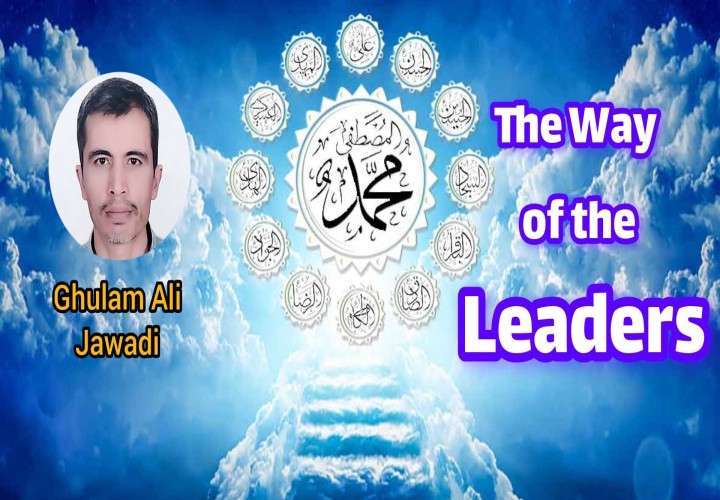
**Course Description: The Way of the Leaders – A
Comprehensive Journey into the Lives of the 12 Imams**
Who are the true successors of the Prophet Muhammad (peace
be upon him and his family)? What was the nature of their divinely appointed
leadership, and how did they navigate some of the most turbulent and
transformative centuries in Islamic history? This course, "The Way of the
Leaders," offers a profound and detailed exploration of the lives,
biographies, and conduct of the Twelve Imams of the Ahl al-Bayt (peace be upon
them).
Far more than a chronological list of names and dates, this
course is a deep dive into the spiritual and intellectual foundations of Shi’a
Islam. Beginning with the unique status of Imam Ali ibn Abi Talib (AS) — his
upbringing in the lap of the Prophet, his unparalleled sacrifices, and his
leadership through civil wars and the establishment of justice — we will trace
the divine legacy through each successive Imam. You will study the difficult
peace treaty of Imam Hasan (AS) with Mu'awiya, understanding the political
pragmatism that preserved the core of the faith. You will walk the sands of
Karbala with Imam Husayn (AS), analyzing the factors, events, and eternal
consequences of the Ashura uprising.
The course will then guide you through the period of
oppression and silence, examining how Imam Sajjad (AS) preserved the message of
Karbala through prayers (Sahifa Sajjadiyya) and tears. You will witness the
foundation of the greatest Islamic university under Imam Baqir (AS) and Imam
Sadiq (AS), where thousands of scholars were trained in theology, jurisprudence,
and the sciences, even as the Abbasid caliphate tightened its grip. We will
explore the network of clandestine representatives (Wikalah) under Imam Kadhim
(AS), Imam Hadi (AS), and Imam Hasan Askari (AS), a sophisticated system that
protected the Shia community and prepared them for the ultimate test: the
occultation of the Twelfth Imam.
Finally, the course culminates with the life and promised
advent of Imam Mahdi (ATFS), exploring the philosophy of occultation, the role
of special deputies, and the global vision of justice his government will
establish. Students will analyze primary sources from both Shia and Sunni
traditions, examine the political and social pressures faced by each Imam, and
draw lessons on leadership, patience, resistance, and spiritual excellence.
Whether you are a student of history, comparative religion, or Islamic studies,
this course will transform your understanding of how spiritual leaders
preserved divine truth in the face of tyranny, and how their conduct remains a
living guide for humanity today. Enroll now to uncover the legacy of the
guiding stars.
"Please note: The times and days of the class can be modified according to the convenience of the applicant/applicants."