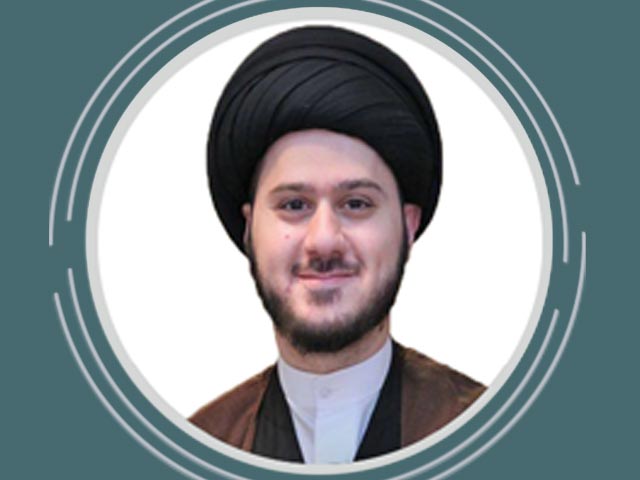
Sayed Saleh Qazwini
4.67
10
Followers
0
Following


Course
Misconceptions about Islam
in Basic Beliefs
17:22 Hours
12 Jul 2026
$50
Course
Biography of Imam Sadiq (a)
in Holy Imams
24:31 Hours
13 Jul 2026
$50
Course
Principles of the Quran
in Quranic Sciences
18:10 Hours
12 Jul 2026
$50
Course
Intro to Tafsir al-Qur'an
in Interpretation
14:52 Hours
13 Sep 2026
$50
Course
History and Development of Shia 2
in Events
15:00 Hours
25 Aug 2025
$50
Course
History and Development of Shia 1
in Events
4.67
30:05 Hours
26 Nov 2022
$50
About
Sayed Mohammed Saleh Qazwini is an Islamic scholar, educator, and lecturer whose academic and religious training spans both the United States and the Islamic Seminary of Qom in Iran. He was born in Iran into a family known for its religious scholarship and commitment to Islamic learning. He is the grandson of Ayatollah Sayed Mortadha Qazwini, a prominent religious scholar who has served as a prayer leader and lecturer at the Holy Shrine of Imam Husayn in Karbala.
Sayed Saleh began his formal academic education in the United States, where he was also actively involved in programs serving Muslim youth and his local community. In 2006, he moved to Iran to pursue advanced Islamic studies at the Islamic Seminary of Qom, one of the major centers of Shia Islamic scholarship. Following his seminary studies, he continued his academic education in the United States.
His academic background includes a bachelor's degree from the University of Michigan and a master's degree from Wayne State University, where his studies were in Near Eastern Studies. Alongside his university education, he completed his studies at the Islamic Seminary of Qom, with a particular focus on Islamic jurisprudence and Islamic scripture.
Sayed Saleh has been actively involved in Islamic education and community service, with a particular interest in working with and mentoring young people. He is also associated with interfaith and intra-faith dialogue and has served as the founding Imam of the Muslim Educational Community Center of America (MECCA).
As a lecturer, Sayed Saleh has addressed audiences in North America, Europe, and Asia, delivering talks on a wide range of Islamic subjects, particularly the Qur'an, Islamic history, theology, the Ahlul Bayt, and contemporary issues facing Muslim communities. His recorded lectures include courses and talks on Qur'anic sciences, Qur'anic interpretation, the history and development of the Shia school of thought, the life of Imam Ja'far al-Sadiq, Islamic beliefs, family and social issues, and various aspects of the teachings of the Ahlul Bayt.
He has also contributed to Islamic media and has presented religious programs on international satellite television channels. His lectures and educational materials have been published and distributed through various Islamic media and educational platforms, allowing his teachings to reach audiences beyond the communities in which he has lectured in person.
Sayed Saleh began his formal academic education in the United States, where he was also actively involved in programs serving Muslim youth and his local community. In 2006, he moved to Iran to pursue advanced Islamic studies at the Islamic Seminary of Qom, one of the major centers of Shia Islamic scholarship. Following his seminary studies, he continued his academic education in the United States.
His academic background includes a bachelor's degree from the University of Michigan and a master's degree from Wayne State University, where his studies were in Near Eastern Studies. Alongside his university education, he completed his studies at the Islamic Seminary of Qom, with a particular focus on Islamic jurisprudence and Islamic scripture.
Sayed Saleh has been actively involved in Islamic education and community service, with a particular interest in working with and mentoring young people. He is also associated with interfaith and intra-faith dialogue and has served as the founding Imam of the Muslim Educational Community Center of America (MECCA).
As a lecturer, Sayed Saleh has addressed audiences in North America, Europe, and Asia, delivering talks on a wide range of Islamic subjects, particularly the Qur'an, Islamic history, theology, the Ahlul Bayt, and contemporary issues facing Muslim communities. His recorded lectures include courses and talks on Qur'anic sciences, Qur'anic interpretation, the history and development of the Shia school of thought, the life of Imam Ja'far al-Sadiq, Islamic beliefs, family and social issues, and various aspects of the teachings of the Ahlul Bayt.
He has also contributed to Islamic media and has presented religious programs on international satellite television channels. His lectures and educational materials have been published and distributed through various Islamic media and educational platforms, allowing his teachings to reach audiences beyond the communities in which he has lectured in person.
Skills
Holy Prophets
Holy Imams

The instructor doesn't have any articles!
The instructor doesn't have any topics!

Instructor doesn't have badge!