
درباره این دوره
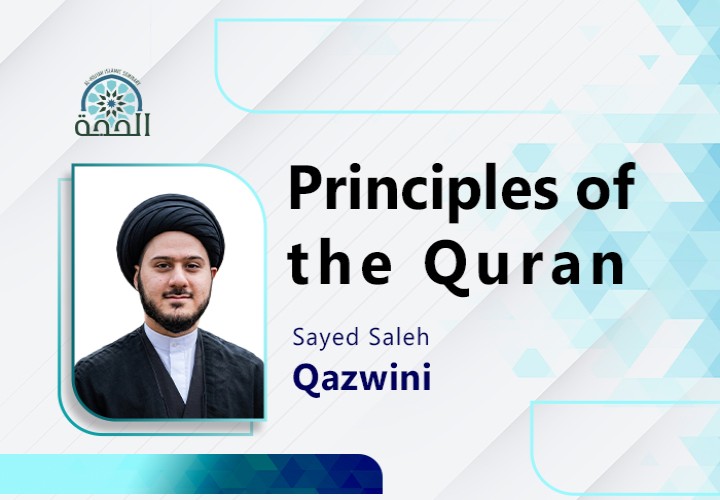
Principles of the Quran, taught by Sayed Saleh Qazwini, offers a thematic study of the Qur'an by examining its major teachings and recurring themes. Rather than focusing on individual verses in isolation, the course explores broader Qur'anic concepts such as Tawhid, justice, mercy, guidance, Prophethood, the Hereafter, worship, and ethical responsibility.
Understanding the Qur'an Through Themes
The course begins with an introduction to studying the Qur'an from a thematic perspective and examines the place of the intellect in understanding Qur'anic teachings. It then explores foundational concepts including Tawhid, belief in the unseen (Ghayb), justice, mercy, and Hidaya (guidance).
Prophethood and Ahlulbayt in the Qur'an
Several sessions examine Prophethood in the Qur'an, with particular attention to Prophet Muhammad and his place in Qur'anic teachings. The course also studies references to Ahlulbayt (Peace be upon them) in the Qur'an and explores their significance within the broader Qur'anic framework.
The Hereafter, Death, and Destiny
The course examines the Day of Judgment and its different phases, along with Qur'anic descriptions of Paradise and Hell. It also discusses death as described in the Qur'an and explores the concept of destiny and its place in Qur'anic teachings.
Social and Ethical Questions
The course addresses several important and sometimes difficult themes, including verses concerning violence and the Qur'anic view of non-Muslims. It also examines Qur'anic teachings on worship, morality, and social responsibility.
Worship and Religious Practice
The final sessions focus on worship in the Qur'an, including the legislation of prayer and fasting, charity, and the principle of enjoining good and forbidding evil. These discussions connect Qur'anic principles with religious practice and ethical conduct.
Learning Materials
Each session includes a PDF containing the important points of the lesson and a multiple-choice quiz to help learners review the material and assess their understanding.
دورههای مرتبط